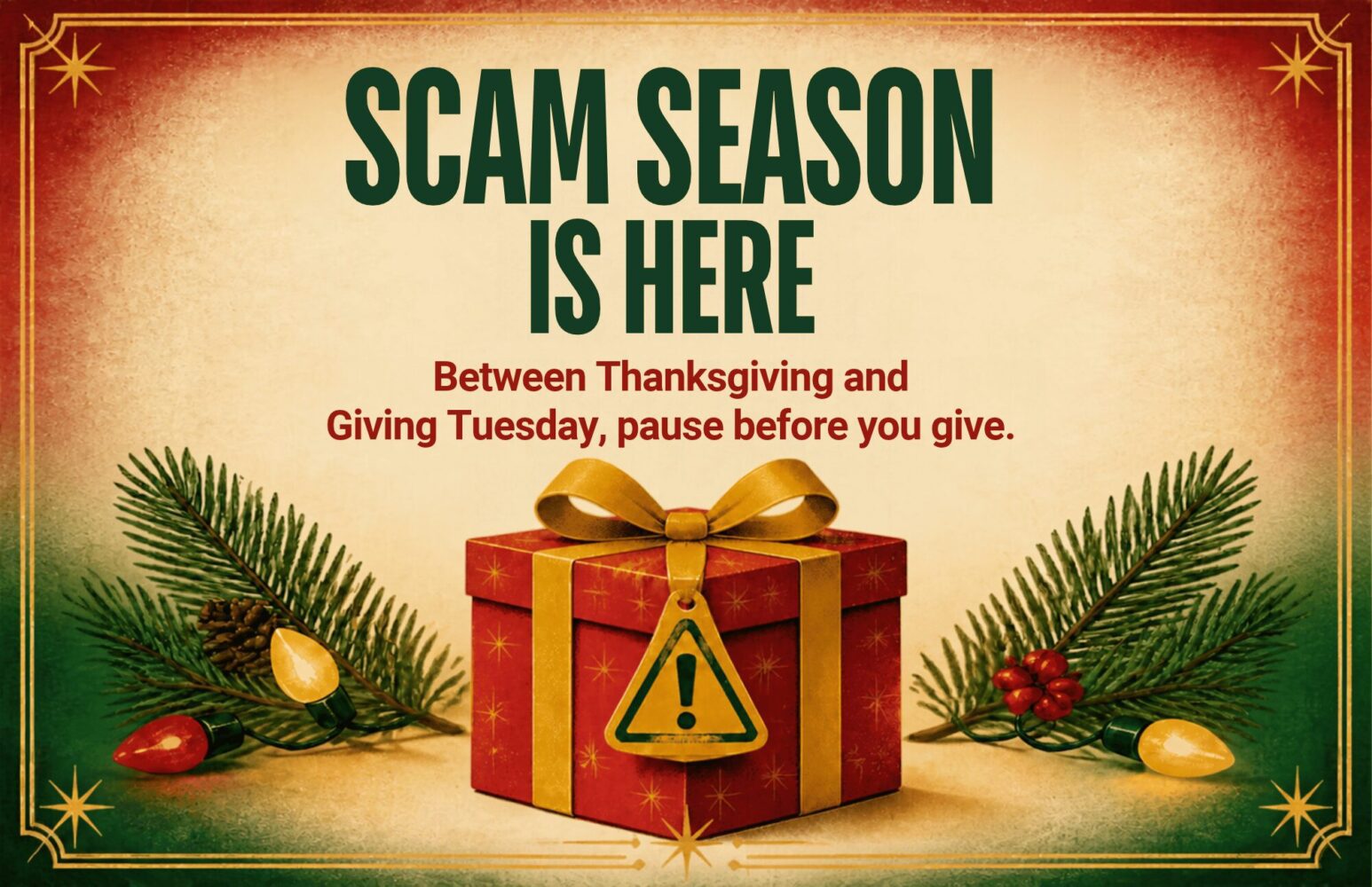
Fake delivery texts, copycat stores, and phony charities peak between Thanksgiving and Giving Tuesday. Here’s how to spot each holiday scam before a personal click becomes a company problem.
Your team is tracking packages, hunting for deals and closing out the year, all at the same time. Scammers count on that distraction, and they plan their busiest weeks around yours.
Here’s the part most businesses miss: holiday scams don’t stay on personal phones. Most people check personal texts and shop on the same laptop they use for work. So, when someone clicks a fake delivery link on their lunch break, the login they type in, or the malware they download, can land on a company device with access to company email, files, and accounts.
The good news is that these scams follow a few predictable patterns. Once your team knows what they look like, they’re much easier to ignore. Here’s what to watch for from Thanksgiving through Giving Tuesday.
“Your package could not be delivered.” (Yes, it could.)
It’s the most common holiday text of the season, and it shows up because almost everyone really is expecting a package:
“Your package could not be delivered. Reschedule here.”
The link opens a page that looks just like a real carrier’s site. It asks you to sign in or pay a small “redelivery fee,” usually a dollar or two. The fee is the point. It’s small enough that nobody thinks twice, and it gets the scammer your full card number. A login page does the same thing for your password.
Stop it: Track packages only in the official carrier or retailer app, or by typing the carrier’s website yourself. If a delivery really failed, it will show up there too.
Cyber Monday: the store that didn’t exist last week
Cyber Monday (November 30) is one of the biggest shopping days of the year, and that makes it a big day for copycat stores. A fake store can go up in an afternoon. It copies a real brand’s product photos, adds a countdown timer to rush you and buys social media ads to get in front of exactly the people who’ve been browsing that product.
The tells are usually small, which is why they work:
- The address is close but off. A brand name with an extra letter, a swapped character or an unusual ending.
- The price is too good. 70 to 80% below what every other store charges.
- The payment options are strange. Gift cards, wire transfers, Zelle or crypto. Real retailers take credit cards.
- There’s nobody to call. No phone number, and a “contact us” page that’s just a form.
You pay, they keep your card details and nothing ever ships. The FBI’s Internet Crime Complaint Center recorded more than $785 million in reported non-payment and non-delivery losses in 2024 (IC3 2024 report).
Stop it: Close the ad, type the retailer’s address yourself and look for the deal there. If it only exists on the site from the ad, skip it. And pay by credit card, so you can dispute the charge if something goes wrong.
Giving Tuesday: the charity with a deadline
Giving Tuesday (December 1) lands the very next day, and scammers shift from selling to asking. Fake charity appeals borrow real causes, like kids, veterans and disaster relief, because those are the causes people want to help. Then they add pressure: “Every gift is doubled until midnight.”
Real charities do run matching campaigns, which is exactly why the fake ones copy them. The difference is in the details. Before you give:
- Go to the charity’s website directly instead of clicking a link in an email or text
- Look the organization up on Charity Navigator or the IRS Tax Exempt Organization Search
- Be wary of names that sound almost like a well-known charity
- Never donate by gift card, wire transfer, or crypto
A real charity will still happily take your donation tomorrow. A deadline that can’t wait 10 minutes for you to check is a warning sign on its own.
If your business gives at year-end
Many businesses make year-end donations, and that creates a work version of the same scam. A donation request lands in someone’s inbox, it looks legitimate and it asks for payment by a certain date.
Treat any donation request that arrives by email the same way you’d treat a payment request: verify the organization on your own, using its official website and the lookup tools above, before any money moves. Better yet, decide which organizations you’ll support before the requests start arriving.
Why these scams work, and how to beat all of them
Every scam on this list runs on the same engine: urgency. Today only. Deal ends at midnight. Payment due now. Every gift doubled until 12. The goal is to get you acting before you’re thinking.
That’s actually good news, because it means one habit covers all of them. Take 30 seconds before you click, pay or give:
- Ask whether the deadline is real. Real deals and real charities can survive a short pause.
- Don’t use the link you were sent. Type the address yourself or use the official app.
- Check how they want to be paid. Gift cards, wires and crypto are red flags everywhere.
Frequently Asked Questions
How can I tell if an online store is fake?
Look for a web address that’s slightly off, prices far below every other retailer, no phone number and requests to pay by gift card, wire, Zelle or crypto. When in doubt, close the ad, type the retailer’s address yourself and look for the same deal there.
Is it safe to click a delivery notification link in a text?
No, even if you’re expecting a package. Track it in the official carrier or retailer app instead. Fake delivery texts often lead to pages that steal logins or card numbers through a small “redelivery fee.”
How do I check that a charity is legitimate?
Go to the charity’s own website directly, then look it up on Charity Navigator or the IRS Tax Exempt Organization Search. Watch for names that sound almost like a well-known charity, and never give by gift card, wire or crypto.
Why does a personal shopping scam matter to my business?
Most people shop and check personal texts on the same devices they use for work. One click on a fake page can expose work logins or put something harmful on a company laptop.
What’s the safest way to pay when shopping online?
A credit card, because you can dispute the charge if an order never arrives. Real retailers and charities don’t ask for gift cards, wire transfers, or crypto.
What should my business do before the holiday shopping season?
Have a quick conversation with your team about these scams, agree on how to verify donation requests and remind everyone to type addresses themselves instead of clicking links in ads, emails or texts.
Get help
Not sure whether a site or message is legitimate, or want to know how your team would handle these scams? Contact InnoTek at 570-316-0385 or book a time to talk.